What is SOE?
SOE stands for Supervised Operating Experience and is a period of time when a newly type-rated pilot flies with a "mentor pilot." However, the devil is in the details as we now explore.
Written By Tyler Flagg
Last updated Almost 2 years ago
Supervised Operating Experience (SOE)
Modern flight simulators are marvels of aviation technology, offering pilots a chance to earn type ratings without ever stepping foot in the actual aircraft. Yet, the FAA recognizes that there are differences between simulated and real-world flying. To bridge this gap, the FAA enforces Supervised Operating Experience (SOE), requiring new type-rated pilots to log time in the actual aircraft under the guidance of a supervising pilot before acting as Pilot in Command (PIC).
According to FAR 61.64, pilots earning their first type rating entirely in a simulator must complete 25 hours of SOE in the aircraft. During these flights, they must act as PIC under the supervision of a qualified PIC, who must sign off on each flight. Once completed, the pilot can present their logbook to the FAA to obtain an unrestricted type rating. While exemptions exist for certain military and turbine-experienced pilots, SOE remains a critical step for many transitioning to jet operations.
However, there’s a significant gap in FAA regulations when it comes to defining a “mentor pilot” for SOE. The FAA has minimal requirements for who can serve as the supervising PIC: they need only hold a private pilot certificate and a type rating for the aircraft in question. This means someone with as little as 25 hours in a jet could legally mentor another pilot, leading to scenarios where inexperience compounds rather than mitigates risk.
Insurance and “Mentor Pilots”
This is where insurance companies step in, often establishing stricter requirements for mentor pilots. Based on conversations we’ve had with leading aviation insurance brokers while building Flying Company, they generally consider a mentor pilot to be someone who meets the Open Pilot Policy (OPP) hours for the aircraft. These OPP hours typically include thresholds for total time, multiengine time (if applications), turbojet time (if applicable) turbine time, and time in type, providing a more robust standard than the FAA’s baseline.
For more information on Open Pilot Policies and how to find them, check out our article on the topic - “What is an Open Pilot Policy?”
For example, a PC-24 pilot with just 25 hours in type may technically meet the FAA’s requirements to act as a supervising PIC but would likely fall short of most insurance standards. Unfortunately, it’s not uncommon to see low-time pilots advertising themselves as mentor pilots for SOE purposes, creating confusion and potential risks for operators.
Solution: ‘Open Pilot Hours’ badge
At Flying Company, we understand how crucial it is for operators to have confidence in who they hire. That’s why we’ve built a Open Pilot Hours badge into our platform. This badge is displayed alongside a pilot’s profile and quotes, signifying that the pilot meets the OPP hours derived from the Insurance Profile you set up for your aircraft. These hours serve as a clear benchmark for operators, ensuring they are matched with experienced pilots who meet insurance expectations.
The badge not only adds transparency but also helps mitigate risk for both operators and pilots, fostering trust in the Flying Company platform. By integrating this feature, we’re elevating industry standards and addressing a critical gap in how SOE is approached.
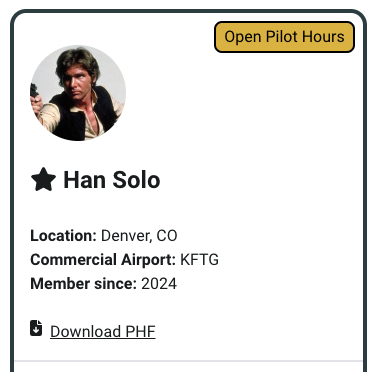
As always, we highly encourage operators to reach out to their insurance broker to discuss which pilot to hire. Flying Company makes this easier than ever by providing the ability to download Pilot History Form’s for each pilot who provides a quote.
Why This Matters
While SOE is designed to ensure pilots are ready for the real-world challenges of jet operations, the lack of clear standards for mentor pilots can undermine the process. Flying Company is committed to bringing clarity, accountability, and quality to this space. Our ‘Open Pilot Hours’ Badge is just one example of how we’re leveraging technology to create a safer, more efficient aviation industry.
By setting higher standards for mentor pilots and providing operators with the tools to make informed decisions, we’re ensuring that SOE becomes a stepping stone to success, not a potential weak link in the chain.
Was this helpful?
Still need help? Ask the team