What is an Open Pilot Policy?
Written By Tyler Flagg
Last updated Almost 2 years ago
When hiring a contract pilot, it’s important to familiarize yourself with the insurance policy for your aircraft; especially the Open Pilot Policy (also known as the Open Pilot Warranty). This is the case regardless of whether you find a pilot on your own, or through Flying Company.
What is an Open Pilot Policy?
Some aircraft insurance policies are strictly ‘Named Pilots Only’. This means that if a pilot is not explicitly listed on the policy, they are not covered to operate the aircraft. However, other policies include an Open Pilot Policy (OPP), which offers flexibility.
The following terms may also be used to describe the same thing:
Open Pilot Warranty (OPW)
Pilot Warranty Endorsement
An OPP allows pilots who meet specific minimum qualifications outlined by the insurer to fly the aircraft without needing to be named explicitly on the policy.
Key Considerations
While OPPs provide flexibility, they are intended for occasional, ad-hoc flights rather than for regular or routine pilot access. This means:
1. Ad-Hoc Use Only
The OPP is designed to cover one-off situations where an aircraft owner needs a pilot. It is not intended to provide coverage for a pilot who frequently operates the aircraft.
2. Transparency with Your Insurer
Flying Company helps you connect with pilots, but you must ensure your insurance policy aligns with the pilots you hire. Be upfront with your insurance broker about your operational needs and the pilots you plan to use. Misrepresenting a pilot’s experience or frequency of use under the OPP could jeopardize your coverage in the event of a claim.
3. Qualifications Matter
Insurers often set minimum requirements for pilots under an OPP, such as total flight hours, ratings, or age restrictions. Ensure that any pilot hired through Flying Company meets these requirements before dispatching them to fly your aircraft.
How Flying Company Helps You
Flying Company’s platform simplifies finding the right pilot while giving you the tools to ensure compliance with your insurance requirements:
Step 1: Find Your Insurance Policy
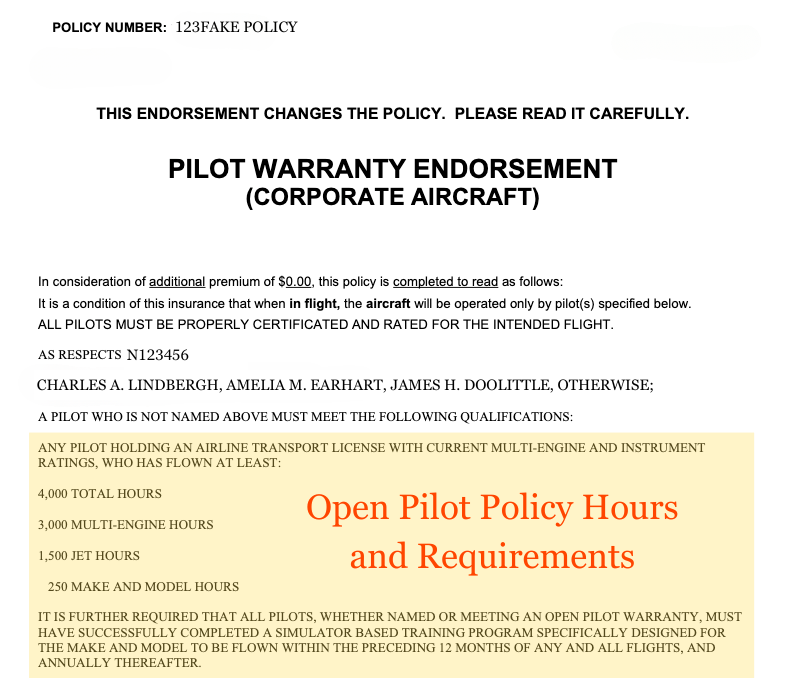
Find your insurance policy and search for either Open Pilot Policy, Open Pilot Warranty, or Pilot Warranty Endorsement. You should come across a page that looks something like this….
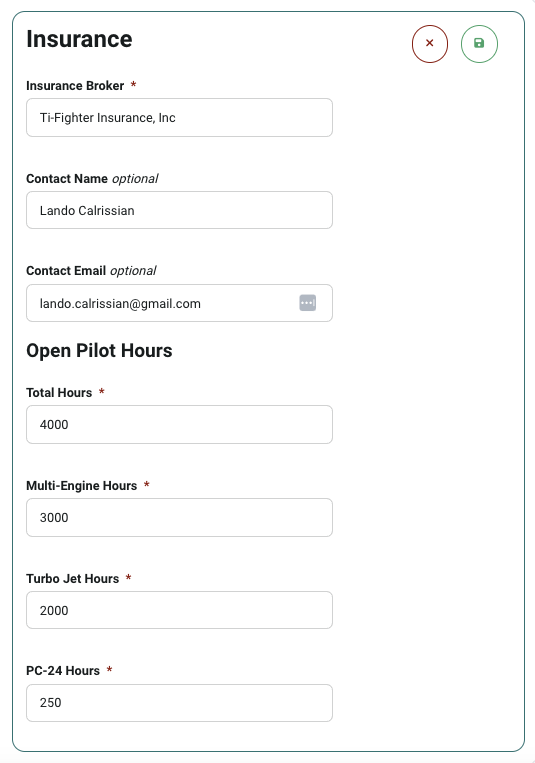
Step 2: Add those hours to your Aircraft Profile
After locating the Open Pilot Policy section of your insurance, you will want to navigate to the insurance section of your aircraft profile.
Menu > Aircraft > Insurance
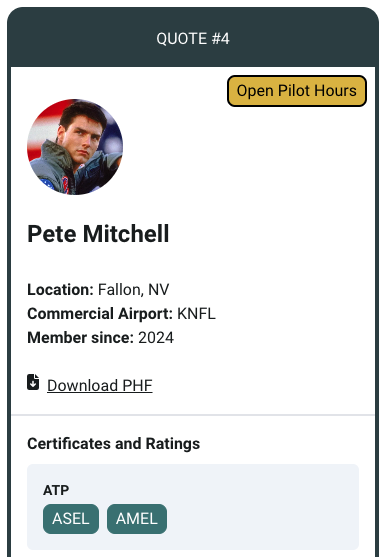
Step 3: Look for “Open Pilot Hours” Badge
After creating a trip and receiving quotes, you will want to look for the “Open Pilot Hours” badge. This badge will be given to pilot who meet the Open Pilot hours as listed on your aircraft profile (Step 2).
IMPORTANT:
Please note that there are often other requirements aside from just hours that you will need to manually check for yourself. In the example given above, for a pilot to meet the Open Pilot requirements they must also have;
Air Transport Pilot (ATP) Certificate
Multi-engine and Instrument Ratings
Completed simulator-based training for Make/Model (MM) within last 12 months.
These additional requirements are not factored in to the “Open Pilot Hours” badge!
By understanding how Open Pilot Policies work and leveraging Flying Company’s tools, you can ensure a smooth and compliant process for hiring pilots while protecting your aircraft and operational flexibility.
As always, we highly recommend reaching out to your insurance broker before hiring any contract pilot. You are welcome to download the PHF’s for each pilot who provides a quote for your trip and email them to your broker. At that point, they can help provide guidance as well as a recommendation for who to hire.
Was this helpful?
Still need help? Ask the team